IA.

Ishan Ahluwalia

I work on robot perception and learning, with recent projects at Human Archive on egocentric SLAM and learning dexterous manipulation from human video.

I study AI & Applied Mathematics at the University of Pennsylvania. At Penn’s GRASP Lab, I work with Prof. Cynthia Sung on optical tactile sensing and control for soft underwater robots. My earlier research focused on brain–computer interfaces and wearable sensors for rehabilitation.

Recent work HARD2 · Human Archive, 2026

Research & Projects

Perception · Robot learning · Sensing
HA-SLAM / Camera trajectory estimation

Human Archive · Technical report · July 2026

HA-SLAM: Egocentric Visual–Inertial SLAM

Ishan Ahluwalia, Samay Maini

Stereo-inertial SLAM for head-worn cameras under motion blur, low light, and rapid head rotation.

  • Learned feature extraction and matching, egocentric backend optimization, and cross-modal metric self-calibration.
  • Reported mean raw trajectory error of 0.54 cm at 99.0% tracking completeness on Human Archive’s motion-capture benchmark.
HARD2 / Dexterous manipulation

Human Archive · Research project · October 2026

HARD2: Human-Video Pretraining for Dexterous Manipulation

A controlled study of how egocentric human data transfers to robot manipulation. I worked on this project at Human Archive.

  • Compared three human-video pretraining datasets and a no-pretraining baseline using VITRA and matched robot demonstrations.
  • Evaluated on a Franka FR3 with a Wuji Hand 2: 200 trials across four tasks.
  • Human Archive pretraining achieved 40% task success on new objects, versus 28% and 24% for the other datasets and 12% without human-video pretraining.
Compare task success by pretraining dataset

Task success (%) · 25 trials per split, per model. Evaluation details

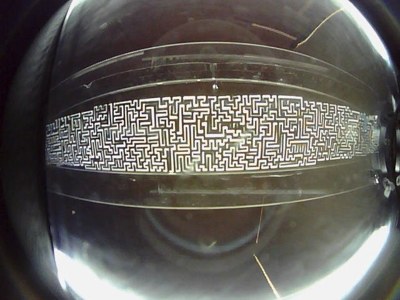
Patterned elastomer skin viewed through a fisheye camera
Optical tactile sensing / Elastomer skin

GRASP Lab, University of Pennsylvania · Research project

Optical Tactile Sensing for Underwater Robotics

With Annie Yang and Prof. Cynthia Sung

Camera-based estimation of contact location, indentation depth, and force from the deformation of a patterned elastomer skin.

  • Built a pipeline connecting controlled indentation, synchronized camera and load-cell recordings, pattern extraction, and learned estimation.
  • The documented ResNet18 baseline reports held-out-location MAE of 0.52 mm in location Y, 0.38 mm in indentation, and 55 mN in force.
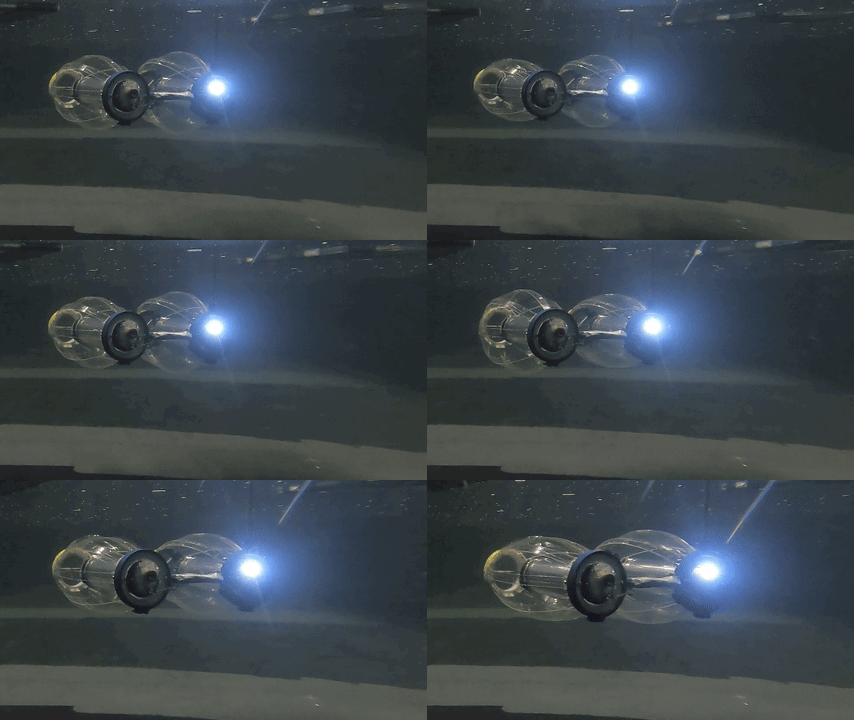
SLAP soft aquatic robot locomotion
SLAP / Aquatic soft robot

GRASP / Sung Lab, University of Pennsylvania · Research project

Reinforcement Learning for Aquatic Soft Robots

Reinforcement-learning control for SLAP, a soft limbless aquatic propulsor.

  • Designed reward states for locomotion and tested them in a 2D reinforcement-learning simulation.
  • Explored optical tactile sensing and CNN-based localization for environmental feedback.
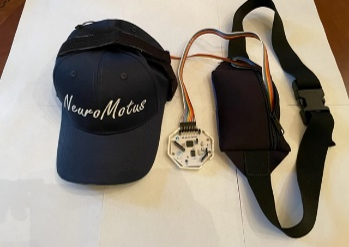
NeuroMotus EEG cap prototype
NeuroMotus / EEG interface

Independent research · Oregon Health & Science University · 2022–2024

NeuroMotus: EEG-Based Movement Intent Prediction

Movement-intent decoding for assistive interfaces in cerebral palsy rehabilitation.

  • Combined EEG processing and a CNN with a ROS-controlled virtual limb and visual neurofeedback.
  • Integrated an OpenBCI Cyton board with a custom dry-electrode cap.
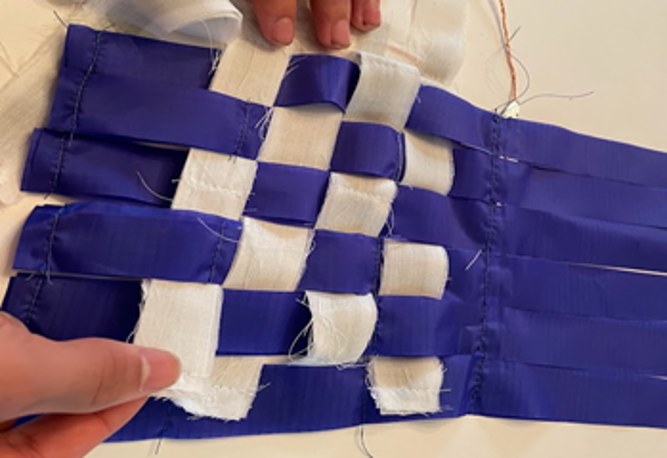
Woven triboelectric sensor prototype
MusTENG / Wearable sensor

Independent research · Journal of Research: High School · 2022

MusTENG: Wearable Sensing for Muscle Spasticity

A wearable triboelectric sensor and machine-learning pipeline for muscle-spasticity monitoring.

  • Fabricated a woven sensor and used a convolutional autoencoder to derive a muscle-spasticity score.
  • Connected sensor feedback to a rehabilitation game.